Your Children Are Watching You Panic: The 7-Step Protocol That Could Save Their Lives
Every survival guide assumes you're a lone wolf—someone who can move fast, think clearly, and travel light. But when you have a 5-year-old clinging to your leg, a diaper bag over your shoulder, and sirens wailing outside your window, every rule in the book becomes useless.
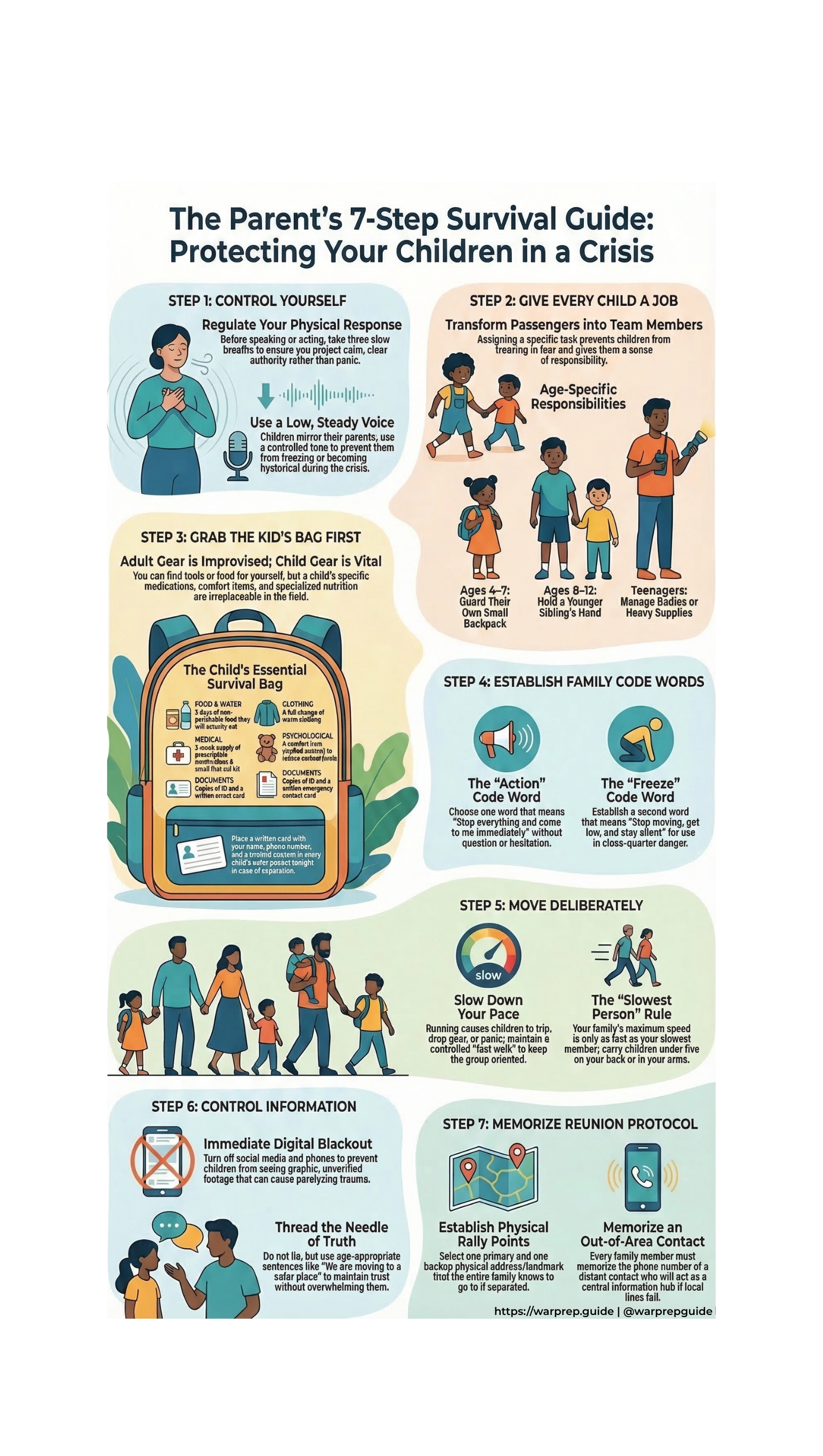
Download this infographic to keep offline
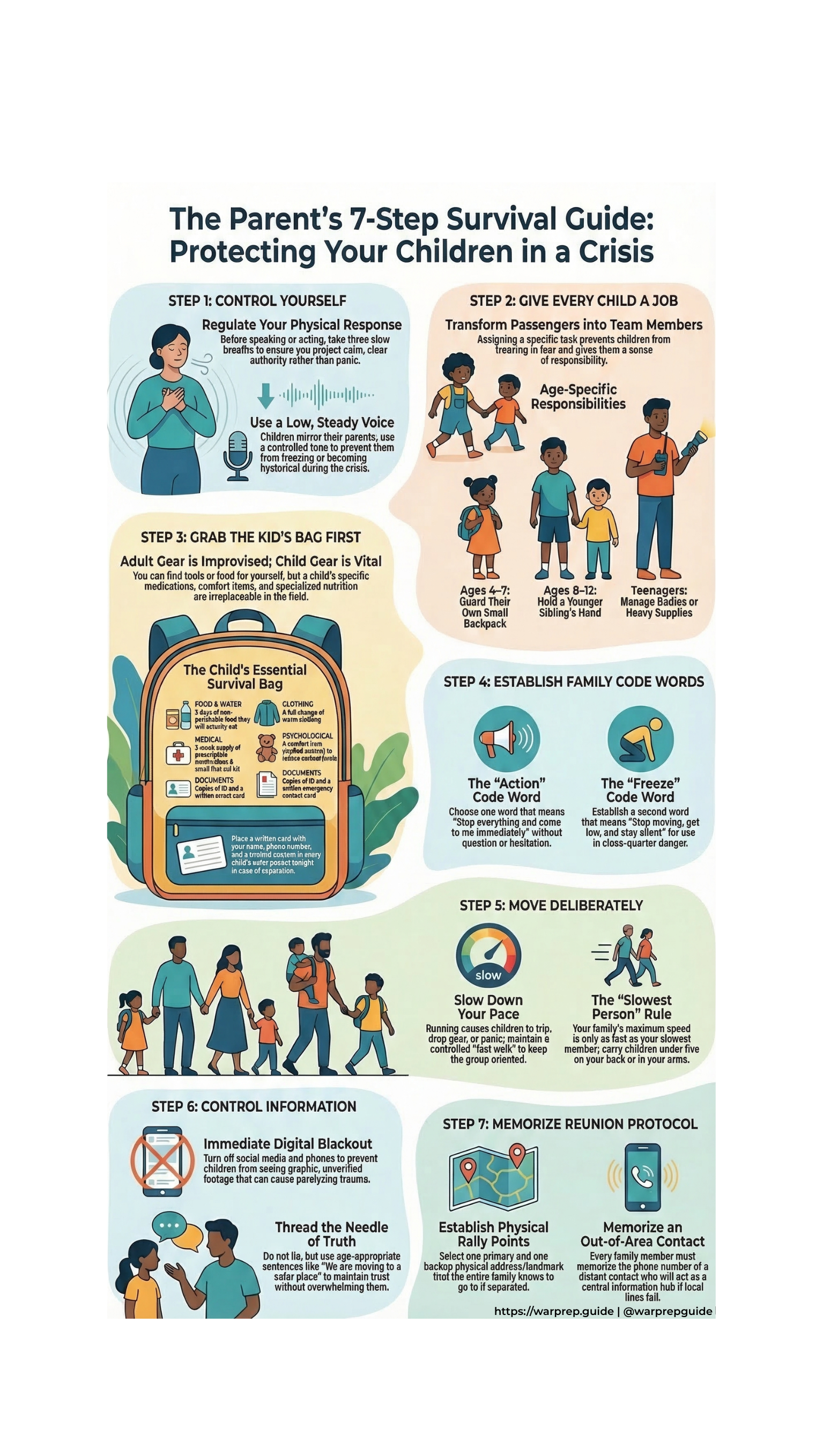
In a chaotic emergency, your children don't respond to the danger in front of them. They respond entirely to you. A panicking child who screams or freezes can stop your entire evacuation at the worst possible moment. This isn't a soft parenting lecture—this is hard survival reality.
If war or disaster reaches your city, here are the seven things you must do first to keep your family alive—in exact order.
Master Your Own Panic First
Before you grab water or make a single phone call, you must regulate yourself. Your children are emotional sponges—they will absorb and amplify whatever energy you project. A parent who panics creates children who become liabilities in an evacuation.
The Protocol:
- Take three slow, deliberate breaths before you speak to your children
- Use a low, steady voice—children mirror your tone
- Give clear, simple instructions without long explanations or false promises
- Your calm authority is what keeps them moving, not your words
Give Every Child a Job
Fear paralyzes, but purpose propels. A child with a specific task is a child who doesn't freeze. By assigning them a role, you transform them from a frightened passenger into an active member of your survival team.
Age-Specific Roles:
- Ages 4-7: Hand them their own small backpack. Their only rule: never let go.
- Ages 8-12: Hold a younger sibling's hand under any circumstances.
- Teenagers: Carry supplies or monitor the emergency radio.
They will rise to the responsibility. Trust them.
The Child's Bag Takes Priority
If chaos is closing in and you only have time to grab one bag and run, it must be the children's bag. You can improvise adult food or tools, but you cannot magically acquire pediatric medicine or specialized nutrition in a warzone.
The Child's Essential Bag:
- 3 days of food they will actually eat (not emergency rations they'll refuse)
- Full change of warm clothing
- 2-week supply of any medications
- A comfort item to reduce cortisol and keep them functional
- Copies of ID and a written emergency contact card
Critical Action Tonight:
Put a written card with your name, phone number, and a trusted contact in every child's outer pocket. If you are separated, this card becomes their lifeline to being identified and reunited with you.
Establish Family Code Words
In active conflict, noise and chaos take over. Verbal communication breaks down, people shout over each other, and children stop processing full sentences. You need pre-programmed responses that bypass conscious thought.
The "Action" Code Word
One word that means "Stop everything and come to me immediately—no questions, no hesitation."
The "Freeze" Code Word
One word that means "Drop low and stay completely silent." For close-quarter danger.
Military families use this system because a child who freezes instantly is far safer than one processing instructions on a three-second delay. Drill it monthly until it becomes muscle memory.
Move Deliberately—Never Sprint
Every instinct will scream at you to run as fast as possible. Ignore it. That instinct will get your child hurt.
Children have shorter strides, less coordination, and will trip, lose your hand, or become disoriented in a panic. Running creates chaos. Deliberate movement creates control.
The Protocol:
- Move at a deliberate, fast walk—not a run
- Children under 5 go on your back or in your arms—they do not run beside you
- Accept this reality: you are only as fast as your slowest family member
- Plan your routes with this constraint in mind
Control Their Information Environment
In a conflict environment, children will be exposed to things no child should ever see. You cannot control the world, but you can control their information ecosystem.
Immediate Digital Blackout
Cut off access to phones and social media immediately. Secondhand graphic violence and unverified footage can cause acute stress responses that cripple a child's ability to follow instructions.
Thread the Needle of Truth
Do not lie, but use age-appropriate sentences: "We are moving to a safer place." Maintain trust without overwhelming them with details they cannot process.
The Reunion Protocol
It is the single most paralyzing fear for any parent: getting separated from your child. Because it's too painful to think about, most families are completely unprepared for it.
Every Family Member Must Memorize:
- Primary Rally Point: A physical location the whole family knows
- Backup Rally Point: In a different direction, in case the first is inaccessible
- Out-of-Area Contact: A distant relative or friend who acts as a central information hub
Make children recite these out loud at dinner once a month. Do not rely on saved phone numbers—phones get lost, broken, or confiscated.
The Hard Truth
Most parents will never do these seven things because preparing for a nightmare feels like inviting it in.
But the parents who prepare aren't pessimists—they are the ones whose kids make it home.
Don't wait until the crisis is at your door.
Start your preparations tonight.